Mattress design, explained
Vispring Diamond Majesty: Understanding Its Materials and Mattress Design
A luxury mattress can make a memorable first impression, but its real character lies beneath the surface. Here’s how to think about the Vispring Diamond Majesty’s materials and construction—and what to confirm before deciding whether its feel suits you.
“Luxury mattress” is an inviting phrase. It suggests fine materials, careful construction and a sleep surface designed to feel special from the moment you lie down. But the label alone cannot tell you how a mattress will support your body, whether you’ll find it comfortable through the night, or how its materials compare with those in other designs.
That’s why anyone researching the Vispring Diamond Majesty should begin with the details that define a mattress: its spring system, upholstery layers, firmness choices, dimensions and care guidance. Those specifications offer a clearer picture than a name or price point ever could. They also help separate the questions a product description can answer from the ones only an in-person comfort assessment can resolve.
One important note for careful shoppers: specifications can vary between models, sizes, markets and production periods. Details published for another Vispring mattress should not automatically be treated as Diamond Majesty specifications. Before relying on a particular material, spring count or firmness option, check current model-specific information with the retailer or manufacturer.
Start with the construction, not the name
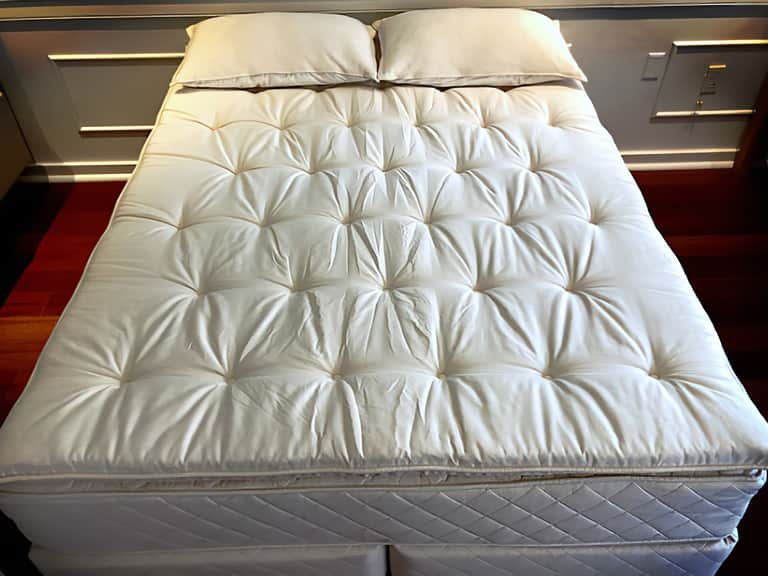
A mattress is a system of layers. The support core provides the underlying structure; comfort materials above it influence how the surface yields around areas such as the shoulders and hips. The cover, quilting and border also contribute to the overall feel and to how the mattress behaves from its center to its edges.
In a traditional luxury pocket-spring design, individual springs are housed in fabric pockets. Because the springs can respond separately, the surface may adapt locally to pressure rather than moving as one connected unit. That description is useful as a general explanation of pocket springs, but it is not a substitute for confirmed Diamond Majesty specifications. Verify the spring construction and any available tension options for the exact model you are considering.
Upholstery layers can be just as important as the springs. Natural or blended fibres may add loft, cushioning, resilience or moisture management, depending on their type and placement. But a list of appealing materials does not, by itself, tell you how the whole mattress will feel. The thickness and arrangement of the layers, the spring tension beneath them and the sleeper’s own body all play a part.
Construction terms are most useful when they help answer practical questions. Does the surface feel gently cushioned or more immediate and firm? Does it accommodate your shoulders when you lie on your side? Does it feel stable when you sit or sleep near the edge? A specification sheet can frame those questions. Testing the mattress helps answer them.
What materials can—and cannot—tell you
Mattress materials have distinct properties, but their names should not be mistaken for a comfort guarantee. Wool, cotton, silk, cashmere, alpaca and horsetail are examples of fibres used in some high-end mattress upholstery. Each can contribute a different combination of softness, loft, resilience and moisture handling. Whether a particular fibre appears in the Diamond Majesty, and how much is used, should be confirmed in current product documentation.
Wool is often used in bedding for its cushioning and ability to take up moisture. Cotton is familiar as a cover and upholstery fibre, while silk is prized for its fine, smooth character. Other animal fibres may be selected for softness or springiness. These broad descriptions help explain why manufacturers combine materials, but they cannot establish the exact feel or performance of a specific mattress.
It is equally helpful to distinguish a material’s reputation from a verified claim. “Natural,” “premium” and “breathable” can describe different things depending on the product and the evidence behind the wording. If certifications, sourcing standards or chemical-treatment claims matter to you, look for documentation that names the relevant standard and explains what it covers. A material description alone does not necessarily establish a certification or a health benefit.
Layer order also matters. A fibre near the top of the mattress has a different relationship to your body than one placed deeper in the upholstery. The surface layers may influence the first impression of softness, while deeper layers can contribute to how that softness transitions into support. Ask for a cutaway description, layer-by-layer breakdown or written specification where available.
Firmness is personal—and labels are only a starting point
Firmness is one of the first things people look for, and one of the easiest to misread. A “medium” feel is not a universal measurement shared consistently by every maker. Two mattresses with the same label may feel different because they use different upholstery, spring systems and overall designs.
Your sleep position can help guide a comfort assessment. Side sleepers often pay particular attention to whether the shoulder and hip can settle without creating pressure. Back sleepers may focus on whether the mattress feels supportive through the torso while still cushioning contact points. Stomach sleepers commonly look for a surface that does not allow the midsection to sink uncomfortably. These are useful considerations, not rules that determine one ideal mattress for everyone.
Body shape, weight distribution, sensitivity to pressure and personal preference all affect how a mattress feels. So can the bed base. A mattress tested on a showroom display may feel different when paired with a particular foundation or slatted frame at home. Check the manufacturer’s support requirements and try, where possible, to assess the mattress on a base comparable to the one you plan to use.
If the Diamond Majesty is offered in different tensions, ask what those options mean in practice and whether the choice applies to the full mattress or can differ by side. Confirm the available configurations rather than assuming that another model’s choices apply. When testing, give yourself time to settle into your usual position instead of judging solely by the first few seconds.
A showroom test with a little more purpose
Trying a mattress in person can turn a long list of specifications into a more meaningful experience. A brief sit on the edge may tell you something about the border, but it won’t tell you how your shoulders feel after lying on your side. A quick press with your hand may show surface softness, but it cannot replicate a full night of sleep.
For a more useful assessment, wear comfortable clothing, lie in your usual sleep position and stay on the mattress long enough to notice whether you relax or keep adjusting. If you share a bed, test it together. Pay attention to whether changing position feels easy, whether movement from the other side is noticeable and whether the edges feel secure for your normal use.
Bring a short list of questions. Ask what the mattress is made from, what sits closest to the cover, which firmness options are available, what base is recommended and how the mattress should be maintained. Request current written specifications if a detail matters to your decision. A clear answer is more useful than a broad reassurance that a mattress is luxurious or suitable for everyone.
- Does the surface feel comfortable in your usual sleeping position?
- Do your shoulders and hips feel cushioned without an unpleasant sense of sinking?
- Can you change position comfortably?
- Does the mattress feel stable near the edges you use?
- Are the stated firmness, materials and spring details specific to the Diamond Majesty?
- What are the trial, return, delivery and warranty terms?
Comfort is not a contest of which mattress feels most impressive for a minute. The more useful question is whether the design feels appropriate for your body and preferences, and whether the practical terms make sense for your household.
How it fits into the wider luxury mattress conversation
Comparing models can help make construction easier to understand, as long as the comparison stays precise. Vispring’s Opulence mattress, for example, is a separate model with its own published construction details. Its product information describes a three-layer hand-nested calico pocket-spring system and a range of natural upholstery materials. Those details belong to the Opulence; they should not be assumed to describe the Diamond Majesty.
That distinction matters because neighbouring models can differ in ways that influence both feel and value. A spring count is meaningful only in context: mattress size, spring arrangement, tension and upholstery all affect how the finished design behaves. Likewise, a longer material list does not automatically mean a better match for every sleeper. Use comparisons to identify what differs, then verify each point against the model you are considering.
There are also other construction approaches worth understanding. For example, some latex mattresses use layered latex cores and a quilted cover rather than a pocket-spring system. The Naturally Organic Hudson Luxe Latex Mattress is one such different design, featuring Dunlop latex with wool and cotton. Comparing it with a spring mattress can clarify the kinds of material and construction choices available, but it does not make either approach automatically superior.
The goal of comparison is not to crown a universal winner. It is to understand how construction choices correspond to the qualities you care about: a particular response under pressure, the feel of the surface, the materials used, or the maintenance requirements. A model-by-model comparison is most trustworthy when it keeps specifications attached to the correct product.
Don’t overlook size, base and everyday care
A mattress can be beautifully made and still be the wrong practical fit if it does not suit the bed frame, room or sleeping arrangement. Confirm the exact dimensions and thickness for the size you need, including any variation in height across sizes. Check whether the mattress is intended for a particular foundation and whether a center support is required for larger sizes.
Maintenance guidance should also be specific. Some mattresses are designed to be rotated; others may have a one-sided construction and should not be flipped. Care instructions can vary with upholstery and cover design, so avoid relying on general advice from another model. Follow the Diamond Majesty’s own instructions for rotation, cleaning and protection, and ask whether the cover is removable or intended to remain in place.
A mattress protector may help guard against ordinary spills and soiling, but make sure it is compatible with the mattress and does not interfere with the surface feel you chose. A protector is not a remedy for every kind of damage, and it should not replace the care directions supplied by the maker.
Ask about delivery access, installation, removal of an old mattress and the terms of any trial or exchange. These details are not glamorous, yet they shape the experience of owning a large, substantial mattress. They can also help you understand the true cost and level of commitment before you decide.
Questions worth asking before you decide
Research becomes easier when you turn general interest into a few concrete checks. The following questions can help you assess the Diamond Majesty without getting swept up in shorthand or assumptions:
- Which materials are confirmed for this exact model? Ask for the current written specification, including the upholstery layers and cover details.
- How is the spring system configured? Confirm the spring type, arrangement and available tensions for the size you want.
- What does the firmness description mean? Ask how the available feel options differ and, if possible, test them yourself.
- What support base is required? Check compatibility with your frame and any requirements for slats or center support.
- What care does the manufacturer recommend? Confirm whether to rotate, whether to avoid flipping and how to handle cleaning.
- What are the warranty and return terms? Read the conditions, exclusions and any trial-period requirements carefully.
These questions are not a way to second-guess every marketing phrase. They are a simple path to better-informed expectations. If a detail is important—such as a particular fibre or a specific firmness option—make sure it is confirmed for the exact mattress and market rather than inferred from another model’s description.
A thoughtful way to reach a decision
The Vispring Diamond Majesty may attract attention as a luxury mattress, but choosing well is less about the promise of a grand name and more about matching verified design details to your own experience. Understand what the mattress is made of, how its support system is built, which comfort choices are actually offered and what the maker expects for setup and care.
Then bring the conversation back to your body. Test the mattress in your normal sleeping positions, take your time and notice whether the surface feels comfortable rather than merely plush. Consider your sleeping partner, your bed base and the practical terms of delivery, trial and warranty. A mattress is a personal piece of equipment used night after night; its value depends on how well it works for the person sleeping on it.
Most importantly, keep the model details straight. Information about another Vispring mattress can offer helpful context about the brand’s broader design vocabulary, but it cannot stand in for a Diamond Majesty specification sheet. Verify the current details, assess the feel in person when possible and let comfort—not the luxury label alone—guide the final decision.
The quick takeaway
To understand the Vispring Diamond Majesty, focus on its confirmed materials, spring construction, firmness options, compatible base and care guidance. Specifications explain the design; a careful, personal comfort test helps you decide whether that design feels right for you.